Choosing among


Choosing Among Different Types of Hip Replacement: A Surgeon's Guide to Materials, Longevity, and Recovery
[1-Minute Key Takeaways]
- Three main types: Conventional THR (majority), Resurfacing (active young men), and Dual Mobility (high instability risk).
- Bearing options: Polyethylene with metal/ceramic, Ceramic-on-Ceramic, and Metal-on-Metal (resurfacing only).
- Longevity: Modern bearings are expected to last for life. Cross-linked polyethylene shows excellent 28-year results.
- Best for young men: Hip resurfacing (e.g., ReCerf) offers the highest functional recovery and allows impact sports.
- Women & older men: Conventional THR with Oxinium on cross-linked polyethylene (e.g., Polar 3) is the safest, most reliable choice.
Do I really need a hip replacement? What are the alternatives?
Please see 'Treatment of arthritis of the hip FAQs' at www.asiamedicalspecialists.hk.
When should I consider hip replacement?
We believe that modern hip replacements will last for many years, so there is little advantage in delaying the procedure if pain is affecting sleep or daily life despite optimal non-operative treatment. Usually the pain and disability from hip arthritis gradually gets worse, until is it is 'worse than death' [1]. The commonest complaint of patients after hip replacement is 'I wish I had done the operation earlier....'
What Kind of Hip Replacements Are Available?
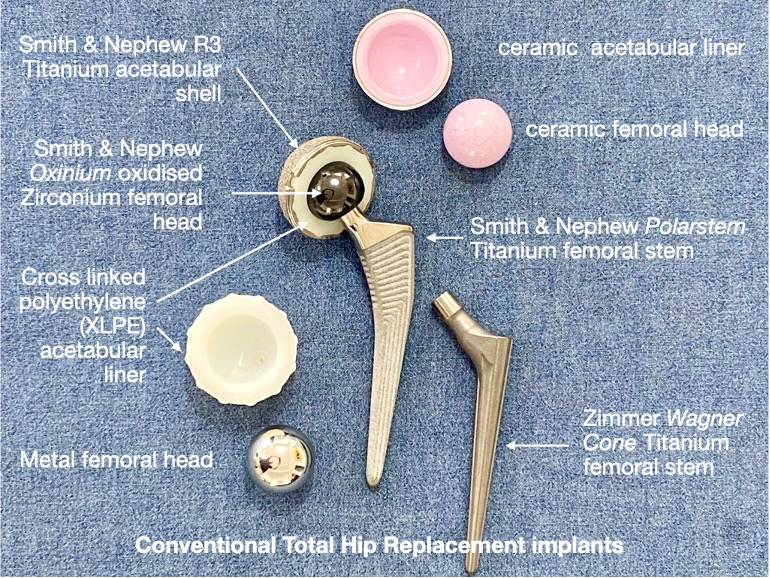
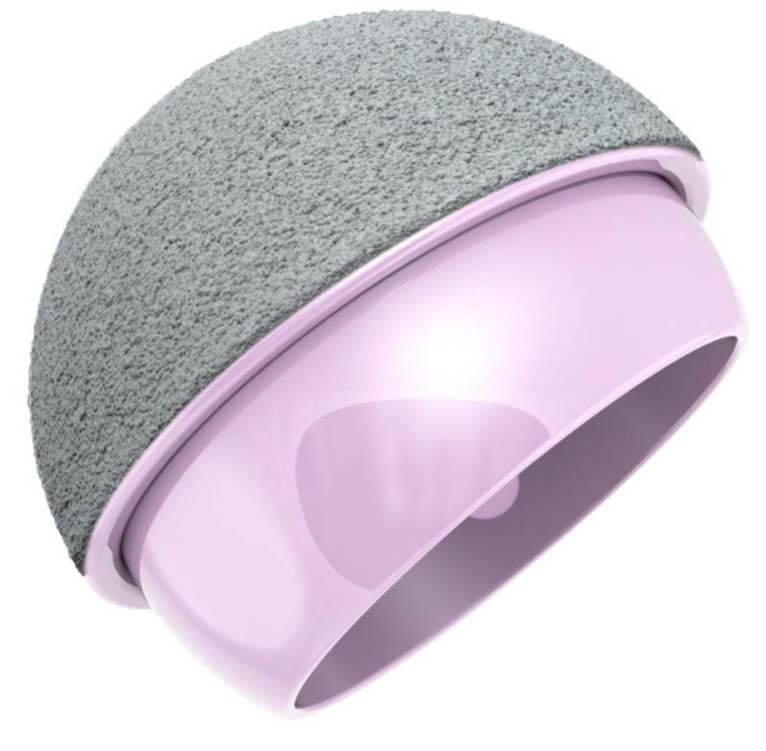
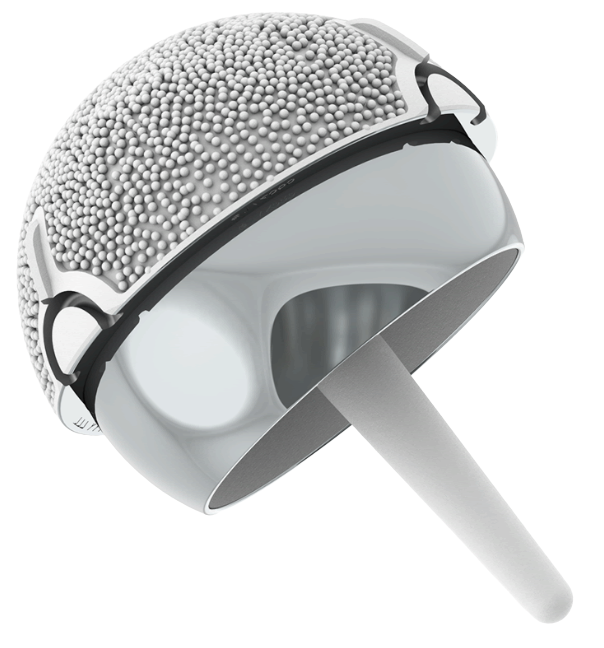
There is a variety of modern total hip replacements, most of which give very good results. There are three major types of hip replacement:
- Conventional — for the majority of people;
- Resurfacing — for active young people;
- Dual Mobility — for people with special risks of instability of the joint.
Major Modern Bearing Combinations
- Polyethylene with metal or ceramic or ceramicised metal — conventional only;
- Ceramic-on-Ceramic — conventional and resurfacing;
- Metal-on-Metal — resurfacing types only.
%20dual%20mobility%20THR.jpg?1791959233827)
How Long Do They Last? Understanding Wear Debris
Modern hip replacements are expected to last for life. The most important issue affecting the longevity of a hip replacement is wear particles generated by the bearing.
The early designs of conventional metal-on-polyethylene hip replacement (developed by Sir John Charnley) functioned well in the medium term, but eventually failed because the wear particles caused a reaction which led the bone supporting the implant to be eaten away. New bearings have been developed to overcome this problem.
The original polyethylene bearings have been treated with radiation to cross-link the molecules in the polyethylene (similar to vulcanising rubber) and improve wear resistance, and the first group is doing very well at 28 years [2]. In addition, new materials have been developed to replace the original polished metal (stainless steel or cobalt-chrome alloy) femoral heads, including ceramic and ceramicised metal.
Ceramic-on-ceramic bearings have been developed which produce a lesser total volume of wear debris relative to polyethylene, although a higher number of particles, because the individual particles are smaller, but they seem to be less biologically active, and cause less bone reaction. There are a number of reports of good results at around 20 years for ceramic-on-ceramic [3, 4] and ceramic and ceramicised metal on crosslinked polyethylene in young patients (under 50 years of age) [5].
Metal-on-metal bearings (made of cobalt-chrome alloy) are, when correctly positioned, fully lubricated, and do not produce any significant wear; however, if they are poorly positioned, they produce very corrosive wear debris which eats away the tissues very quickly. Some of the early metal bearings, implanted in the 1960s, outlived their owners, so it is possible that a lubricated metal bearing could last indefinitely.
Current metal-on-metal bearings are mostly 'resurfacing' type implants. The first widely successful resurfacing was the Smith & Nephew Birmingham Hip Resurfacing. One of the Birmingham Hip Resurfacing design team has reported excellent 25-year results in young men [6], and independent surgeons have reported excellent 20-year results in young men [7]. Surprisingly, despite the excellent results, Smith & Nephew are withdrawing the Birmingham Hip Resurfacing in 2026 for commercial reasons.
Recently, ceramic-on-ceramic hip resurfacings have become available, and, though they are relatively new and we don't have long-term data, the short-term outcomes are excellent, and it's reasonable to expect the long-term outcomes will be even better than those for metal-on-metal hip resurfacings [8]. There are two new ceramic-on-ceramic hip resurfacings now available, the MatOrtho ReCerf and Zimmer H1. The ReCerf has a longer and wider history of use and is essentially a ceramic copy of the successful MatOrtho Adept metal-on-metal hip resurfacing.
What About Activity and Recovery Speed?
Resurfacings offer the best chance of the highest possible functional recovery, with many patients returning to impact sport, including professional sport. Tennis Player Andy Murray returned to top-level competition with a Birmingham Hip Resurfacing.
I believe the benefits of activity outweigh the potential risks to the hip replacement, and I encourage my patients with both resurfacing and conventional hip replacements to be active, and I have many patients with both resurfacing and conventional hip replacements playing impact sports and in other ways using their hips to their fullest ability without problems, including returning to running, skiing, professional dance and acrobatics.
What Gives the Quickest Recovery?
Conventional total hip replacement, using a minimally invasive SPAIRE approach [9], gives a very quick recovery, with only a few activity restrictions until 6 weeks and none after 6 weeks.
Hip resurfacing, because it is a bigger operation, requiring release of more muscles, has a slower recovery, and it's necessary to take it very easy for 6 weeks to allow the soft tissues to heal, and then to limit walking for another 6 weeks to reduce the risk of a fracture of the neck of the femur, giving a total of 3 months of activity restrictions.
What About Other Factors (Instability)?
For most people, the most important issues are longevity and activity, and then speed of recovery. People with unusual anatomy — for example after an injury or spinal problems — or weakness of muscles around their hips — may be at increased risk of instability (dislocation) and may benefit from a special 'dual mobility' implants which have improved stability, though at the potential risk of more early complications and, possibly, shorter overall life of the implant.
What Gives Better Function? Hip Resurfacing or Conventional THR?
As with most things in medicine, there is much debate, but much recent evidence supports the position that hip resurfacings give better function [23-26]. However there are at least two papers which report no difference [27, 28]. One of these papers [28] was criticized [29] for reporting a difference of 10% in walking speed as 'no different' when many would argue that the ability to walk 10% faster is very significant, and the authors are wrong in concluding there is 'no difference'.
The other paper [27] describes a well-designed trial, so there is at least one study reporting no difference in function. In a private discussion, one of the authors of this trial expressed surprise at the outcome, and suggested that, because the trial involved many surgeons, most of whom were not hip specialists, and some were in training, that the resurfacing operations were not done as well as the conventional THRs (because resurfacing is a more complex operation) and thus, on average, the resurfacings were not performing at their theoretical maximum potential. However the trial was not designed to look at this, and, though he theorised that a well-performed hip resurfacing should provide a higher level of function than a well-performed conventional THR, his trial did not demonstrate this.
As far as I am aware, there are no reports of worse functional outcomes in hip resurfacing compared to conventional THR.
Patient-Specific Recommendations: Age, Gender, and Height
I'm a Young Man — What Type Should I Choose?
If you are a young man with osteoarthritis, there is little doubt that you are best with a resurfacing. Resurfacing was designed for young men with osteoarthritis, and the Australian National Joint Replacement Registry reports that for men under 55 years of age with osteoarthritis, the Birmingham Hip Resurfacing and the Adept are the best performing of all kinds of hip replacements in Australia [9].
If you have osteonecrosis of the femoral head (ONFH) (also known as Avascular Necrosis or AVN) you could expect the same excellent results as in osteoarthritis, as long as your ONFH is not too severe. There are various reports, many from Asia, of the results of BHR in ONFH equalling the results in osteoarthritis [10-15]. If the ONFH is severe, and the femoral head is over 50% damaged [16], you'd be best with a conventional hip replacement.
I Am an Older Man — What Should I Choose?
For the average older man, a conventional total hip replacement is a safe and reliable procedure with a relatively rapid recovery and excellent function. For a very active older man (e.g., Heli-skiing, hill running, martial arts, competitive sport) it may be worth the added risks of resurfacing for the likely improved performance.
As one ages and the bones become less dense, there is increased risk of femoral neck fracture with a resurfacing, and one has to take things easy for 3 months after the operation to let the bone regain its strength. Apart from this, there are no specific risks with resurfacing in older men. There are reports of good success in older people [10, 11]. My oldest patient was 88 when he had both of his hips resurfaced in one operation. He was soon back on the golf course and continued playing until passing at 97 years of age. Could they have done this with conventional THRs? Possibly. I have young female patients who, being unable to have resurfacing, have returned to very high level activity, including acrobatics and professional dance, with conventional THRs.
I am Female — What Should I Choose?
Currently, women are recommended to have conventional hip replacements or ceramic-on-ceramic resurfacings, but not metal-on-metal resurfacings. Women generally did much worse than men with metal-on-metal resurfacings, and in 2015 the makers of the Birmingham Hip Resurfacing and the Adept hip resurfacing recommended that resurfacing not be performed in women.
Very active women may choose ceramic-on-ceramic bearing resurfacings, however a less active woman is probably best with conventional hip replacement. With good rehabilitation, the performance of modern conventional hip replacements is excellent, with women returning to sport and dance at high level.
I am not very tall / very Tall — What Should I Choose?
Shorter people do well with conventional total hip replacements. The smallest resurfacings have a 40 mm head diameter and are suitable for very small people.
If you are very tall, resurfacing best recreates normal anatomy. My tallest patient is 6'10", and he did not require the largest standard size. For patients over 7' tall, extra-large resurfacing implants are available via special order.
What gives better function? Hip resurfacing or conventional THR?
As with most things in medicine, there is much debate, but much recent evidence supports the position that hip resurfacing gives better function [23-26].
However, there are at least two papers which report no difference [27, 28]. One of these papers [28] was criticised [29] for reporting a difference of 10% in walking speed as ‘no different’ when many would argue that the ability to walk 10% faster is very significant, and the authors are wrong in concluding there is ‘no difference’.
The other paper [27] describes a well-designed trial, so there is at least one study reporting no difference in function. In a private discussion, one of the authors of this trial expressed surprise at the outcome, and suggested that, because the trial involved many surgeons, most of whom were not hip specialists, and some were in training, the resurfacing operations were not done as well as the conventional THRs (because resurfacing is a more complex operation) and thus, on average, the resurfacings were not performing at their theoretical maximum potential. However, the trial was not designed to look at this, and, though he theorised that a well-performed hip resurfacing should provide a higher level of function than a well-performed conventional THR, his trial did not demonstrate this.
As far as I am aware, there are no reports of worse functional outcomes in hip resurfacing compared to conventional THR.
Special Considerations: Metal Allergy, Pregnancy, Osteoporosis, and Fracture
I'm Allergic to Metal — Is This a Problem?
Currently the question of metal sensitivity or allergy is controversial. We don't believe anyone is allergic to the Titanium widely used in conventional hip replacement. Metal-on-metal resurfacings, some conventional hip replacements, and many other types of orthopaedic implants are made of an alloy of Cobalt and Chromium.
Although both of these metals are normally used in human biology (Cobalt in Vitamin B and Chromium in the liver enzyme Cytochrome p450) it is thought that some people are sensitive to higher levels of these metals. A test for sensitivity to the Cobalt and Chromium used in resurfacings (and other implants) has recently been reported, and will most likely become widely available [17]. Some older women may be sensitised to metal owing to wearing nickel-containing jewellery. A few men seem to be allergic to metal, developing inflammation and fluid collections around their metal-on-metal hip resurfacings.
Can I Have a Baby After a Hip Replacement?
There is no definite risk to having a baby after having a hip replacement, however, if one has the luxury of being able to schedule both the hip replacement and the pregnancy, it is recommended to either have the baby first, or to delay becoming pregnant until about one year after the hip replacement [18] because of the theoretical risk of birth defects from chemicals leaking out of the implants. I say 'theoretical' risk because, so far, no birth defects have been tied to hip replacements, and most mothers with hip replacements have had healthy babies.
The placenta reduces the levels of many chemicals reaching the baby including metal ions from metal hip replacement bearings [19]. Often the pain of arthritis is less in early pregnancy because of the increase in steroid hormones in the mother's circulation. In later pregnancy increased weight and altered posture may make pain worse. It is safe to take paracetamol and/or to have a steroid injection into the hip joint whilst pregnant.
For women who already have hip replacements, some have increased pain during pregnancy, and many of those who have continuing pain after delivery require revision of their hip replacement, however, compared to age-matched hip replacement patients who do not have babies, there is no difference in revision rate — suggesting that pregnancy does not affect the life of the hip replacement [20, 21]. Most likely the pain is owing to changes in posture associated with pregnancy.
Hip replacement has no effect on childbirth, it does not affect the safety or practicality of either a natural or Caesarian section delivery [18]. It is safe to breast feed with a hip replacement [22].
What If I Have Osteoporosis?
In general, osteoporosis is not a problem. In individuals with osteopaenia or osteoporosis of the neck of the femur (thigh bone), the bone density recovers after hip resurfacing [30-33], but it is necessary to take things easy for about 3 months after the operation. In conventional THR the neck of the femur is removed and replaced with metal, so bone strength is not an issue and one does not need to restrict activity, but there is a greater risk of fracture during the operation in osteoporotic bone. In very soft bone, it's probably best to have a cemented rather than cementless femoral stem.
What If I 'Break My Hip'?
The term 'broken hip' usually applies to older people breaking the upper end of their femur as a result of a fall. Young people can break their hips, but, as the bone becomes weaker because of age-related decreases in bone density, this injury is more common in older people. It is a serious injury.
If one has a hip replacement of some sort, one can still break one's hip — but the bone breaks around the hip replacement. If one has a hip resurfacing the broken hip follows the same pattern as in a natural hip, and is treated in the same way [34]. If one has a total hip replacement the bone breaks around the femoral stem, and is often more difficult to treat [35].
Is there anything else I should consider? There are two papers suggesting that overall mortality is lower over several years in resurfacings versus conventional total hip replacement [36, 37]. This is presently unexplained, though it caused a deal of controversy.
Surgeon's Recommendations and Why These Particular Implants
Although every type of hip replacement represents a compromise, and we do not have the data on which to base a truly informed decision, I recommend either:
- Ceramic on ceramic resurfacing. I specifically recommend the ReCerf system manufactured by MatOrtho. This is probably the best choice for active young people.
- Ceramicised-metal on plastic. For older people or those whose anatomy is not suitable for resurfacing. I recommend an Oxinium femoral head on cross-linked polyethylene from the Smith & Nephew company — specifically the R3 acetabular shell and the Polarstem femoral stem (non-cemented for younger people, cemented in selected cases for older people). This is a reliable and proven system — however many other orthopaedic companies make similar systems with similarly good results — but the Polar 3 with an Oxinium on cross-linked polyethylene bearing is one of the best-performing total hip replacements in the National Joint Registry for England & Wales.
- Ceramic on ceramic. Mostly in revisions where there may be debris that could cause damage to polyethylene. I recommend a ceramic-on-ceramic bearing with the R3 acetabular shell and the Polarstem femoral stem from the Smith & Nephew company.
- Dual Mobility. For people with unusual anatomy or other problems requiring extra stability. I recommend the OR3O from the Smith & Nephew company.
Why These Particular Implants?
- The MatOrtho ReCerf is a new ceramic-on-ceramic resurfacing hip replacement. It has been in experimental use since 2018 and was CE approved in 2025. Short-term results are excellent [8]. It is a ceramic version of the very successful MatOrtho Adept metal-on-metal hip resurfacing, which is itself very similar to the very successful Smith & Nephew Birmingham Hip Resurfacing. The Adept and the Birmingham hips were originally manufactured by the same company.
- The Smith & Nephew Polar 3 THR, with a proprietary ceramicised metal (called 'Oxinium') on cross-linked polyethylene bearing (known as 'Verilast'), is one of the best-performing total hip replacement in the National Joint Registry for England & Wales and performs very well in my hands. It has a useful design feature in the Polarstem trial implant which allows accurate estimation of leg length.
- For patients with unusual femoral version (twist of the thigh bone), I use the Zimmer Wagner Cone titanium femoral stem, as this allows correction of the abnormal twist. It's a well-proven device, in use since 1990 [38].
- For patients with unusual anatomy requiring a dual mobility implant, I use the Smith & Nephew OR3O system, which works with the Polarstem and Wagner Cone femoral stems and Smith & Nephew R3 (and Smith & Nephew Redapt revision) acetabular shells, and uses an Oxinium on cross-linked polyethylene bearing.
Frequently Asked Questions (FAQ)
Do I really need a hip replacement? What are the alternatives?
Please see 'Treatment of arthritis of the hip FAQs' at www.asiamedicalspecialists.hk.
When should I consider hip replacement?
We believe that modern hip replacements will last for many years, so there is little advantage in delaying the procedure if pain is affecting sleep or daily life despite optimal non-operative treatment. Usually, the pain and disability from hip arthritis gradually get worse, until it is 'worse than death' [1]. The commonest complaint of patients after hip replacement is 'I wish I had done the operation earlier....'
How long do hip replacements last?
Modern hip replacements are expected to last for life. The main factor affecting longevity is wear particles. Cross-linked polyethylene bearings are doing very well at 28 years [2]. Ceramic-on-ceramic bearings show good results at around 20 years [3, 4], and ceramic/ceramicised metal on cross-linked polyethylene in young patients also shows excellent 20-year outcomes [5].
What type of hip replacement is best for a young active man?
For young men with osteoarthritis, hip resurfacing is the best choice. The Australian National Joint Replacement Registry reports that for men under 55 years of age with osteoarthritis, the Birmingham Hip Resurfacing and the Adept are the best performing of all kinds of hip replacements [9]. For osteonecrosis (AVN), resurfacings work equally well unless the femoral head is over 50% damaged [16], in which case a conventional THR is recommended.
Can women have hip resurfacing?
Currently, women are recommended to have conventional hip replacements or ceramic-on-ceramic resurfacings, but not metal-on-metal resurfacings. Women generally did much worse with metal-on-metal resurfacings, and since 2015 manufacturers have recommended against their use in women. Very active women may choose ceramic-on-ceramic resurfacings, while less active women are best with a conventional THR.
References
- Scott, C.E.H., D.J. MacDonald, and C.R. Howie, 'Worse than death' and waiting for a joint arthroplasty. Bone Joint J, 2019. 101-B(8): p. 941–950.
- Rajpura, A., et al., A 28-year clinical and radiological follow-up of alumina ceramic-on-crosslinked polyethylene total hip arthroplasty: a follow-up report and analysis of the oxidation of a shelf-aged acetabular component. Bone Joint J, 2017. 99-B(10): p. 1286–1289.
- Petsatodis, G.E., et al., Primary cementless total hip arthroplasty with an alumina ceramic-on-ceramic bearing: results after a minimum of twenty years of follow-up. J Bone Joint Surg Am, 2010. 92(3): p. 639–44.
- Hamadouche, M., et al., Alumina-on-alumina total hip arthroplasty: a minimum 18.5-year follow-up study. J Bone Joint Surg Am, 2002. 84(1): p. 69–77.
- Zitsch, B.P., et al., Highly Cross-Linked Polyethylene in Patients 50 Years of Age and Younger: A 20-year Follow-Up Analysis. J Arthroplasty, 2024. 39(9S1): p. S145–S152.
- Nandra, R.S., et al., Birmingham Hip Resurfacing at 25 years. Bone Joint J, 2024. 106-B(6): p. 540–547.
- Dhawan, R., et al., Birmingham Hip Resurfacing at 20 years. Bone Joint J, 2023. 105-B(9): p. 946–952.
- Lin, D., et al., Two-Year Results of Ceramic-on-Ceramic Hip Resurfacing in an International Multicenter Cohort. J Arthroplasty, 2024. 39(11): p. 2800–2806.
- Hanly, R.J., S. Sokolowski, and A.J. Timperley, The SPAIRE Technique Allows Sparing of the Piriformis and Obturator Internus in a Modified Posterior Approach to the Hip. HIP International, 2017. 27(2): p. 205–209.
- Park, C.W., et al., Hip resurfacing arthroplasty for osteonecrosis of the femoral head: Implant-specific outcomes and risk factors for failure. J Orthop Translat, 2020. 21: p. 41–48.
- Uemura, K., et al., Long-term results of Birmingham hip resurfacing arthroplasty in Asian patients. J Artif Organs, 2018. 21(1): p. 117–123.
- Bose, V.C. and B.D. Baruah, Resurfacing arthroplasty of the hip for avascular necrosis of the femoral head: a minimum follow-up of four years. J Bone Joint Surg Br, 2010. 92(7): p. 922–8.
- Amstutz, H.C. and M.J. Le Duff, Hip resurfacing results for osteonecrosis are as good as for other etiologies at 2 to 12 years. Clin Orthop Relat Res, 2010. 468(2): p. 375–81.
- Revell, M.P., et al., Metal-on-metal hip resurfacing in osteonecrosis of the femoral head. J Bone Joint Surg Am, 2006. 88 Suppl 3: p. 98–103.
- Mont, M.A., et al., Use of metal-on-metal total hip resurfacing for the treatment of osteonecrosis of the femoral head. J Bone Joint Surg Am, 2006. 88 Suppl 3: p. 90–7.
- Woo, S., Y. Lee, and D. Sun, A Pilot Experiment to Measure the Initial Mechanical Stability of the Femoral Head Implant in a Cadaveric Model of Osteonecrosis of Femoral Head Involving up to 50% of the Remaining Femoral Head. Medicina (Kaunas), 2023. 59(3).
- Langton, D.J., et al., The influence of HLA genotype on the development of metal hypersensitivity following joint replacement. Communications Medicine, 2022. 2(1): p. 73.
- Maffulli, N., A. Del Buono, and V. Denaro, Hip arthroplasty: a transient reason not to be pregnant. Surgeon, 2012. 10(6): p. 347–9.
- deSouza, R.M., et al., Transplacental passage of metal ions in women with hip resurfacing: no teratogenic effects observed. Hip Int, 2012. 22(1): p. 96–9.
- Ginsel, B. and J.M. Pijnenborg, Pregnancy and childbirth after total hip arthroplasty. J Bone Joint Surg Br, 2005. 87(12): p. 1702; author reply 1702.
- Lally, L., et al., Pregnancy Does Not Adversely Affect Postoperative Pain and Function in Women With Total Hip Arthroplasty. J Clin Rheumatol, 2015. 21(6): p. 323–5.
- Nelis, R., J. de Waal Malefijt, and T. Gosens, Breast milk metal ion levels in a young and active patient with a metal-on-metal hip prosthesis. J Arthroplasty, 2013. 28(1): p. 196 e19–22.
- Lingard, E.A., K. Muthumayandi, and J.P. Holland, Comparison of patient-reported outcomes between hip resurfacing and total hip replacement. J Bone Joint Surg Br, 2009. 91(12): p. 1550–4.
- Shimmin, A.J. and J.V. Bare, Comparison of functional results of hip resurfacing and total hip replacement: a review of the literature. Orthop Clin North Am, 2011. 42(2): p. 143–51, vii.
- Zywiel, M.G., et al., Resurfacing matched to standard total hip arthroplasty by preoperative activity levels - a comparison of postoperative outcomes. Bull NYU Hosp Jt Dis, 2009. 67(2): p. 116–9.
- Gerhardt, D., et al., Resurfacing hip arthroplasty better preserves a normal gait pattern at increasing walking speeds compared to total hip arthroplasty. Acta Orthop, 2019. 90(3): p. 231–236.
- Costa, M.L., et al., Total hip arthroplasty versus resurfacing arthroplasty in the treatment of patients with arthritis of the hip joint: single centre, parallel group, assessor blinded, randomised controlled trial. BMJ, 2012. 344: p. e2147.
- Lavigne, M., et al., The John Charnley Award: The functional outcome of hip resurfacing and large-head THA is the same: a randomized, double-blind study. Clin Orthop Relat Res, 2010. 468(2): p. 326–36.
- Cobb, J., Letter to the Editor: The Functional Outcome of Hip Resurfacing and Large-head THA is the Same: A Randomized, Double-blind Study. Clinical Orthopaedics and Related Research, 2010. 468(11): p. 3134–3134.
- Lian, Y.Y., et al., [Changes of the bone mineral density of proximal femur after hip resurfacing arthroplasty]. Zhonghua Wai Ke Za Zhi, 2007. 45(16): p. 1091–4.
- Smolders, J.M., et al., Changes in bone mineral density in the proximal femur after hip resurfacing and uncemented total hip replacement: A prospective randomised controlled study. J Bone Joint Surg Br, 2010. 92(11): p. 1509–14.
- Tapaninen, T., et al., Femoral neck bone mineral density after resurfacing hip arthroplasty. Scand J Surg, 2012. 101(3): p. 211–5.
- Willis-Owen, C.A., H.D. Atkinson, and R.D. Oakeshott, Bone mineral density in the femoral neck increases after hip resurfacing: a cohort with five-year follow-up. Int Orthop, 2011. 35(9): p. 1303–7.
- Mishra, A.S., et al., Strategies for fixation of periprosthetic fragility fractures of the neck of femur below a well-functioning hip resurfacing arthroplasty: A case-series. J Clin Orthop Trauma, 2023. 40: p. 102169.
- Tsiridis, E., et al., Periprosthetic femoral fractures around hip arthroplasty: current concepts in their management. Hip Int, 2009. 19(2): p. 75–86.
- McMinn, D.J., et al., Mortality and implant revision rates of hip arthroplasty in patients with osteoarthritis: registry based cohort study. BMJ, 2012. 344: p. e3319.
- Kendal, A.R., et al., Mortality rates at 10 years after metal-on-metal hip resurfacing compared with total hip replacement in England: retrospective cohort analysis of hospital episode statistics. BMJ, 2013. 347: p. f6549.
- Parry, M.C., et al., The Wagner Cone Stem for the Management of the Challenging Femur in Primary Hip Arthroplasty. J Arthroplasty, 2016. 31(8): p. 1767–72.